.png)




If you're researching alternatives to PCS TMS, you're likely looking for trucking management software that:
- Supports the way your business actually runs, with the workflows your freight type depends on already in place.
- Cuts down the manual data entry your team handles each day. The best TMS tools should allow load information to move through dispatch, billing, and reporting without you having to re-enter it multiple times.
- Actually gets adopted by dispatchers and drivers because it's easy and intuitive to use.
When it comes to TMSs, those that claim to serve everyone often aren't the best fit. Instead, you want something specific to the types of commodities you haul and loads you carry, where the workflows you rely on are built-in features rather than something to configure or work around.
Bulk hauling is one of the clearest examples. A TMS created with bulk hauling in mind treats those workflows as the defaults: the load form already has scale ticket fields, the driver pay screen calculates per-ton compensation automatically, and the dispatch board is designed for multi-load days.
In this guide, we share PCS alternatives that fit different types of business: bulk haulers, brokers and 3PLs, hybrid carrier-broker operations, small asset-based carriers, and enterprises. Within each category, we compare 13 TMS platforms based on the features that matter most.
We'll start with our own software, Toro TMS, and look in detail at how it reduces manual work for bulk haulers across dispatch, billing, and reporting.
Are you a bulk hauler managing fast-turn, high-volume freight operations? Book a demo to see how Toro TMS directly supports how your business runs.
1. Toro TMS: Purpose-built software for bulk hauling

Toro TMS is built for both dry and liquid bulk hauling operations, including aggregate, dairy, fuel, and asphalt fleets that run multiple loads per truck each day.
Every aspect of the platform is built to support how bulk operations—and other companies that handle high volumes of loads each day—actually run. Bulk haulers using Toro typically save up to three hours per day in dispatch and back-office work, as the software helps to:
- Automate your workflow from dispatch through the back office, so a single load record populates driver assignments, driver pay, invoicing, and IFTA reporting without manual re-entry.
- Reduce paperwork and simplify everyday coordination, with load details sent by text and tickets uploaded through a secure link directly from the cab—no app or driver portal required.
- Track trucks in real time and turn fleet data into profit decisions, with ELD integration that feeds live driver and load activity into built-in reporting of margin by lane, customer, and route.
We also made the software really easy to use. New customers receive in-person onboarding with our team. And once you're running, support responds to every request within 30 minutes during business hours, 9 a.m. to 9 p.m. ET.
Our 4.9 rating on G2 and 5 stars on Capterra are direct reflections of our clients’ experience with the software.
In the sections below, we cover how Toro TMS supports bulk haulers at each part of the operation:
- High-volume dispatch with reusable templates and live scheduling
- Driver communication by text message and document upload through a secure link
- Automation that turns completed loads into invoices, driver pay, and IFTA filings
- Load-level profitability and utilization reporting powered by ELD and operational data
Handle high-volume dispatch more efficiently with templates and real-time scheduling
Bulk hauling is typically very different from other kinds of hauling operations. A single bulk truck can rack up 10 to 15 loads in a shift, with the same customers, plants, product types, and rate structures often repeating day after day.
Toro TMS addresses this high volume of repeat loads by centralizing the day-to-day operation into a single dispatch board, so teams aren't switching screens to assign work, monitor jobs in progress, or react to changes. From the dashboard, dispatchers can:
- Build recurring loads from reusable templates that automatically carry customer, location, commodity, rate, and equipment details
- Drag and drop loads onto driver schedules from a visual, easy-to-learn interface that keeps the entire day's work on one screen
- Edit active loads—like new quantities or route adjustments—and have them reach the driver instantly
- See driver and truck availability in real time through ELD integration, with live updates on truck location, assigned loads, and current status
- Track every load's status (unassigned, assigned, en route, on site, delivered) at a glance

For bulk operations, this kind of visibility is what lets a single dispatcher easily manage more than a dozen loads per truck per day.
And once dispatch creates a load, that information automatically feeds into billing, payroll, IFTA reporting, and load tracking. That way, no one has to retype the same data into different systems just to keep all records aligned.
Read more: Dispatch management software: 3 questions to ask to choose the right tool
Text load details to drivers and capture documents digitally through a secure upload link
Bulk drivers benefit from simple, fast tools. When driver workflows rely on mobile apps or portal logins, they can be hard for drivers to pick up and use in practice.
Toro TMS avoids this problem by not using an app at all. Instead, dispatchers send every load directly to the driver as a text message, with no download or login necessary. The same text includes a secure link the driver can tap to upload scale tickets, BOLs, signed delivery confirmations, or any other job paperwork from their phone.
When dispatch builds and assigns a load, the driver gets a text containing:
- Pickup and drop-off locations, with site-specific access notes and gate codes
- Commodity details, including type, quantity, and tonnage or gallonage
- Equipment and handling requirements (which trailer to bring, wash-out or food-grade requirements, etc)
- Delivery time windows and customer check-in procedures
- A unique upload link tied to that specific load
When the driver completes the job, they tap the link, snap a photo of the scale ticket or BOL, and submit it. Toro automatically extracts the relevant data, attaches the document to the correct load, and pushes it through to dispatch and the back office in real time.

For a bulk fleet running 100+ tickets a day across a dozen trucks, Toro’s system makes the difference between billing within hours of delivery and waiting until Friday to start invoicing.
For example, C&W Global, a family-owned trucking company, says Toro TMS significantly improved their day-to-day operations:
"The six hours per week previously spent scanning paperwork has been eliminated entirely. Driver communication is faster and less disruptive, reducing the volume of daily phone calls."
Read more: Truck driver management system: 6 tools for better scheduling & communication
Automate invoicing, driver pay, and IFTA reporting from completed loads, reducing time spent on back-office tasks by up to 70%
In bulk fleet operations, every completed load comes with a scale ticket or BOL, a delivery confirmation, mileage, wait time, and a pay calculation that may be based on tonnage, volume, or yards rather than miles.
Now multiply that by 15 loads per truck per day across a dozen trucks. That amount of operational detail is easier to manage when your software’s workflows are designed specifically for bulk hauling.
Toro TMS centralizes all of this in the same load record dispatch already created. Once a driver submits documentation through the secure upload link, the load is closed in the system with all the information accounting and payroll need to invoice the customer, pay the driver, and update IFTA records.
Specifically, Toro lets bulk haulers:
- Generate invoices in a few clicks. Customer, rate, tonnage, mileage, ticket reference, and supporting documents are already tied to the load, so billing can send invoices individually or in batches without rebuilding them from spreadsheets or paper tickets.
- Calculate driver pay automatically based on actual pay structures. Driver profiles store pay rates (per ton, per yard, per load, hourly, or any combination), and Toro applies them to completed loads along with detention and wait time. Settlements run in seconds rather than days.

For bulk operations, this kind of visibility is what lets a single dispatcher easily manage more than a dozen loads per truck per day.
- Capture IFTA mileage from ELD data. Toro tracks miles by state automatically as trucks run, then rolls that data into audit-ready IFTA reports without the need for manual mileage logs or end-of-quarter spreadsheet work.
- Sync to QuickBooks Online or Desktop with one click. Invoices, driver settlements, and tax data flow directly into your accounting records with mapped fields, so books stay clean without double entry.
As a result, bulk haulers using Toro typically cut up to 70% of the time their back office used to spend on invoicing, payroll, and reporting.
Read more: IFTA software: How to spend less time on fuel tax reporting
Track profitability across every load, lane, and driver with built-in reporting
The difference between a profitable lane and a money-losing one often comes down to small details: long detention at a specific plant or an extra 20 miles of deadhead on a recurring route. These details add up, but they're hard to see when reporting is fragmented across dispatch, accounting, ELDs, and spreadsheets.
All the information already lives in the same system when you use Toro TMS. Reports update in real time as loads are dispatched, drivers complete jobs, and tickets get uploaded. That way, the insights are always available to see what’s working and what isn’t.

With Toro, bulk haulers can:
- See profitability broken down by lane, customer, driver, and equipment type. Identify which routes consistently make money, which customers tie up trucks longer than the rate justifies, and which equipment is delivering the best margin per hour.
- Spot detention and on-site delays as they happen. Reports show which plants, yards, or job sites consistently hold drivers longer than the contract allows, so you can renegotiate, reschedule, or adjust dispatch around them.
- Track utilization by truck and driver. See how many loads each truck is completing per shift, where the slowest days are, and how performance varies across drivers or equipment.
- Identify deadhead miles eating into margin. ELD-tracked mileage shows where trucks are running empty between jobs so dispatchers can rework routing or sequencing to cut unproductive miles.
- Pull a real-time financial summary at any point in the month. Financial performance updates with operational data, so you don’t have to wait for accounting to close out the month to know how the business is performing.
This level of visibility changes the decisions you can make—especially in bulk operations, where high load volume means small inefficiencies compound quickly.
Curious how Toro TMS fits your specific bulk operation? Book a demo with our team.
2 alternative tools for bulk haulers
Here are two additional bulk hauling software options, just in case Toro TMS isn’t quite the right fit. We look at how they handle core operational needs in this niche, like dispatch, driver communication, reporting, and workflow automation.
2. BulkTMS
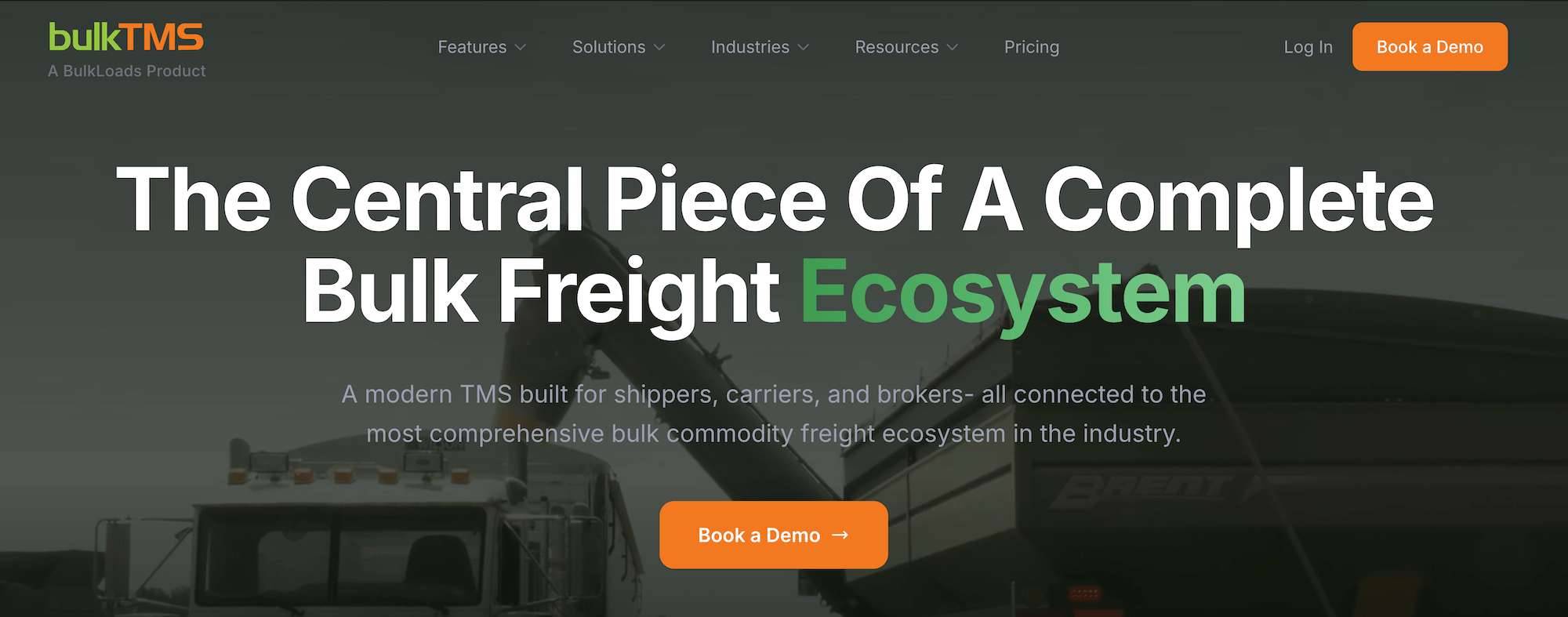
BulkTMS is a transportation management system built for bulk freight operations, with a strong focus on agricultural hauling with commodity-specific workflows tied to the field.
Key features include:
- A dispatch board with reusable load templates, multi-stop load support, lane history, and live truck tracking
- OCR-based document capture for scale tickets, BOLs, and invoices uploaded by drivers through the mobile app
- Automated invoicing tied to commodity rates, surcharges, and completed load data
- A scale ticket module that supports commodity grades, moisture content, tare weights, and other ag-specific data
Several core workflows rely on the company’s mobile app, which may require more onboarding and training for drivers than simpler communication methods. The software also serves operations beyond bulk carriers, including brokers and shippers, so it’s worth checking how its processes function in practice.
3. TrueTMS
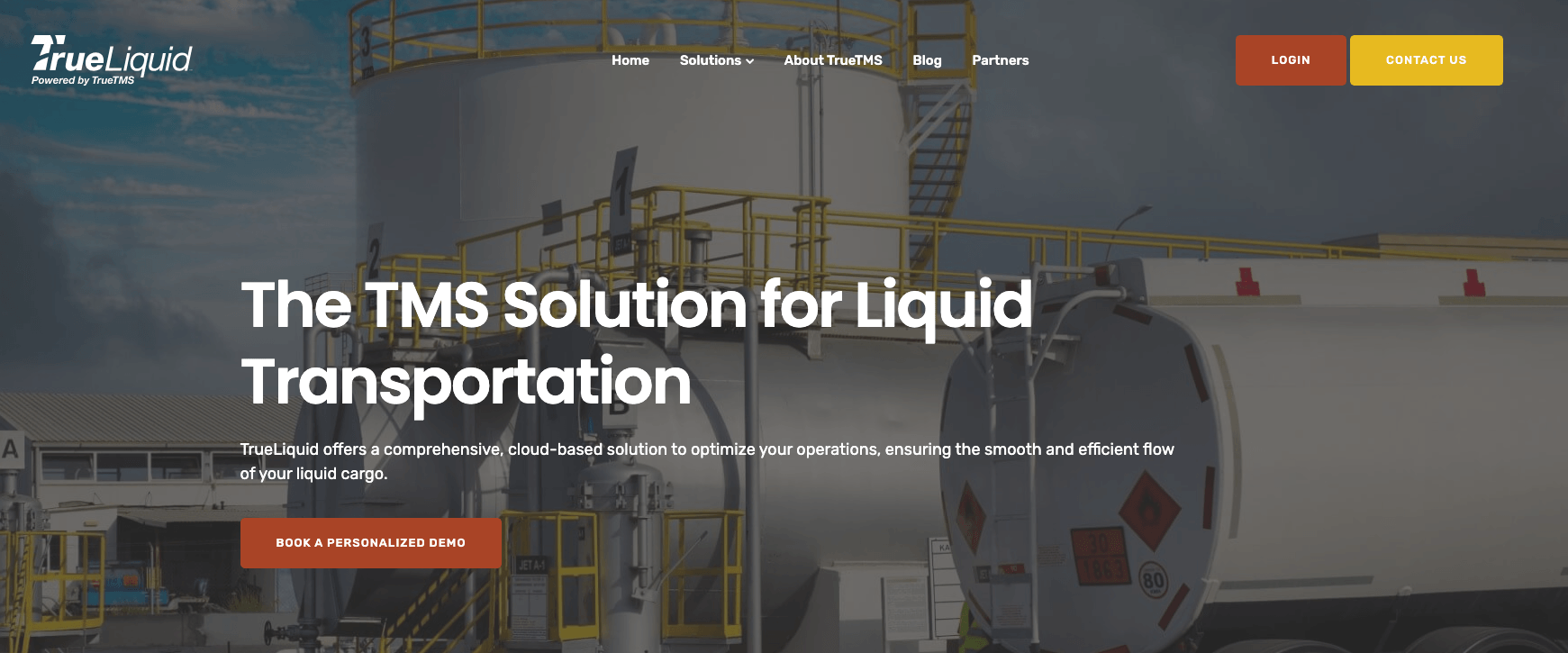
TrueTMS is a cloud-based transportation management platform built mainly for liquid bulk operations that need commodity-specific routing, compartment management, and operational forecasting capabilities tied closely to fuel or liquid freight workflows. Its product suite combines TrueLiquid, TrueFleet, and TrueCast to support dispatch, payroll, routing, forecasting, and fleet visibility within a single system.
Key features include:
- Dispatch and load planning tools with automated order workflows, shipment tracking, and driver status updates through the company’s mobile app
- Real-time tracking through telematics and ELD integrations, along with reporting dashboards and operational analytics
- Liquid bulk-specific tools for commodity management, tank compartment allocation, and dynamic route optimization
- Forecasting and planning tools through the company’s TrueCast platform, including demand forecasting and fuel sourcing visibility
Several core processes depend on the company’s mobile app for driver communication, status updates, and shipment activity. If you’re wary of app-based functioning, this TMS may not be a strong fit.
3 TMS options for brokers and 3PLs
The TMSs in this section are dedicated to broker and 3PL workflows and do not include carrier-facing tools. We look at how they handle key broker and 3PL functions like load management, carrier sourcing, shipment visibility, and reporting.
4. Tai TMS

Tai TMS is transportation management software built for freight brokers, with a focus on full truckload (FTL) and less-than-truckload (LTL) brokerage workflows. The platform integrates AI features across multiple parts of its product, from giving quotes to document handling.
Key features include:
- AI-based email and document processing that extracts shipment details from incoming quote requests, drafts response emails, and converts inbox messages into quote records
- AI-driven carrier matching that analyzes rate and performance data to suggest carrier options for each shipment
- Shipment tracking with branded customer portals for self-service quoting, booking, tracking, and document access
- Custom reporting and dashboards for per-customer, per-rep, and per-location performance, with BI tool integration for margin analysis
Tai is built specifically for FTL and LTL brokerages, so it may not fit operations dealing with mixed-mode shipments or specialized freight types. Several core processes also rely on AI for quoting, document handling, and inbox management, which means teams will need to be comfortable working with automated outputs.
5. Turvo

Turvo is a cloud-native TMS for freight brokers and 3PLs, with built-in collaboration tools that connect brokers, customers, carriers, and supply chain partners on a shared platform.
Key features include:
- Real-time shipment visibility shared across brokers, customers, and carriers, including ETAs, in-transit status, and document access
- A routing guide that automates rules-based workflows and carrier assignments, plus an appointment scheduler for dock and pickup coordination
- A mobile app for broker team access and a driver app that lets carriers share status updates and shipment visibility from anywhere
- A built-in collaboration layer with messaging, social-style carrier invites, and productivity tools that connects internal teams with external carriers and customers
Turvo uses shared, real-time data between brokers and their supply chain partners, which means its value scales with how much of your network is also using the platform. Operations that don't need this level of cross-party collaboration, or that work with carriers and customers less open to a shared portal, may not see the full benefit of the platform's collaborative design.
6. Descartes Aljex

Descartes Aljex is a cloud-based TMS specifically for freight brokers, with more than two decades of development focused on truckload brokerage workflows.
Key features include:
- Automated order entry that executes truckload shipments on a single screen, with automatic rate confirmation and carrier tendering tied to cost-optimal options
- Capacity sourcing and carrier management tools that surface available carriers and rate options for each shipment
- Continuous in-transit shipment monitoring with exception management and real-time stakeholder notifications
- Freight analytics and lane pricing tools that support decisions on rates, routing, and customer performance
Aljex is centered primarily around truckload brokerage workflows. Brokers focused on intermodal, parcel, or specialized freight types may find the truckload orientation less aligned with their operations.
3 providers for hybrid carrier-broker operations
A lot of TMS platforms are multifunctional, offering tools for different types of transportation operations under the same company umbrella. That includes platforms with broker capabilities, which often also support carriers, shippers, and other freight segments.
We look at how each platform handles both sides, including carrier-side dispatch and driver management, brokerage-side tendering and carrier sourcing, multi-entity accounting, and platform integrations.
7. Alvys
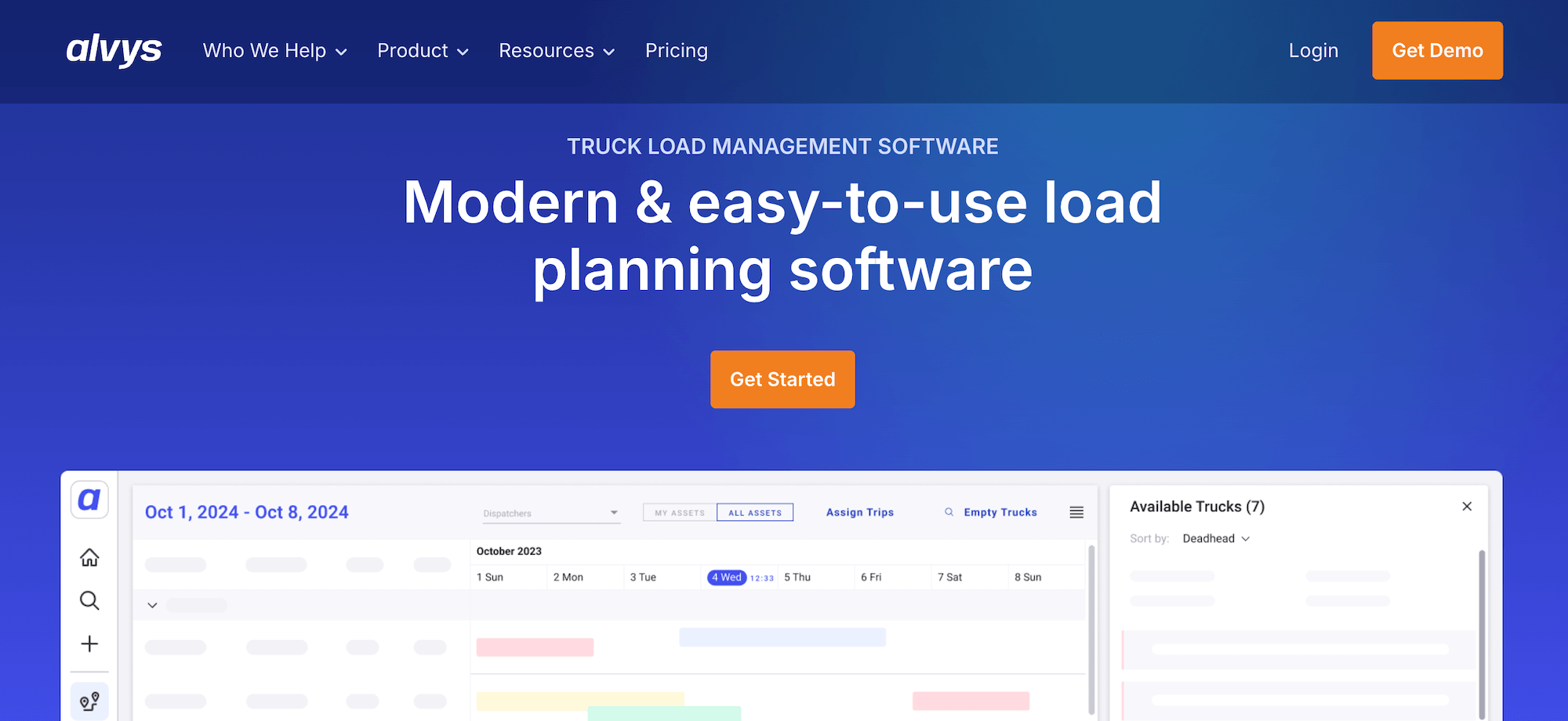
Alvys is a cloud-based TMS that runs carrier and brokerage operations from a single platform, with built-in EDI, AI features, and multi-entity accounting to streamline the workload.
Key features include:
- Combined carrier and brokerage workflows from one login, with separate accounting per entity and shared visibility across both sides of the operation
- Native EDI for accepting and confirming tenders without third-party middleware
- AI-assisted tools for load creation, driver-to-load matching, lane profitability analysis, and on-demand reporting
- A driver mobile app for document scanning, in-field communication, dispatch updates, and asset tracking
Alvys is built for operations that need to manage both the carrier and brokerage sides of the business in one place. However, if you’re an asset-only carrier without a brokerage arm, or a pure brokerage, you may find more depth in a platform built around your operation type.
8. Amous TMS

Amous TMS extends a bit further than just hybrid carrier-broker—it also includes shipper functionality. It's a cloud-based, AWS-hosted TMS with AI integrated across its core workflows, offered on month-to-month contracts.
Key features include:
- Combined carrier, broker, and shipper functionality in one platform, with multi-company management for operations running multiple entities
- Carrier-side tools including AI calendar-view dispatch, fleet management, automated payroll, trailer pool management, and load splitting and consolidation
- Broker-side tools including customer rules logic, carrier vetting and bidding, RFP tooling, lane history analysis, and a multi-modal rating engine
- A customer portal for shipper-facing workflows and a driver mobile app for in-field communication and document handling
Amous fits operations that handle multiple roles in the freight transaction, including those running multiple entities. Single-mode operations focused exclusively on carrier or brokerage work will likely find more depth in a TMS built around one operation type.
9. Rose Rocket

Rose Rocket is an AI-native TMS platform for both brokerages and carriers, with a customizable architecture that adapts to each operation's specific workflows.
Key features include:
- Three built-in AI assistants: TED for converting incoming emails into orders and syncing documents, Rosie for managing order updates and surfacing operational insights, and Rocky for onboarding and ongoing platform optimization
- Core TMS modules ready on day one, including quoting, dispatch, tracking, invoicing, and a driver app for brokers and carriers
- No-code workflow tools that let ops teams build and modify dispatch logic, automation triggers, and custom rules without IT involvement
- Real-time visibility with custom fields, dispatch workflows with drag-and-drop automations, and rate management for lane-level pricing, accessorial rules, and carrier logic
- Customizable reporting and dashboards that pull any data point and export on demand, plus integration support through APIs, SDKs, and no-code connectors
Rose Rocket fits operations that want platform flexibility and the ability to configure their own workflows, rules, and integrations. If you want your TMS to come pre-configured, this is not the best option for you.
2 TMS options for small asset-based carriers
A TMS for small-asset carriers needs to handle core functions like dispatch, driver communication, billing, and settlements without the cost or complexity of enterprise platforms like PCS software.
10. Truckbase

Truckbase is a dispatch-centric TMS for small asset-based carriers that want core functionality without enterprise complexity. The platform leans heavily on automation, mobile workflows, and a clean interface so smaller teams can run dispatch and back-office work without dedicated specialists for each function.
Key features include:
- AI-powered PDF load importer that automates load creation from rate confirmations, with a calendar-based scheduling view and one-click text or email dispatch to drivers
- Text-based driver communication and a mobile BOL scanner that lets drivers upload documents without downloading a separate app
- Instant invoicing, automated settlement generation by load and driver, stop pay and reimbursement handling, and tracking for unpaid and overdue invoices
- 30+ ELD integrations for real-time load visibility, with customizable notifications and live tracking coverage that supports broker carrier scorecards
Truckbase is positioned for small carriers up to about 50 trucks. Operations that need larger-scale customization, multi-entity accounting, or more advanced reporting may outgrow the platform as they scale.
11. ITS Dispatch by Truckstop

ITS Dispatch by Truckstop is a cloud-based TMS solution for owner-operators and small carriers, covering core functions like load management, dispatch, IFTA reporting, and driver settlements. It's part of Truckstop’s larger ecosystem of freight products, including its load board, carrier monitoring, and freight matching tools.
Key features include:
- Load management and dispatching tools for locating, assigning, and tracking loads
- Automated IFTA reporting
- Reporting and analytics based on performance metrics, plus built-in driver communication tools
- Accounting software integration and access to the Truckstop Load Board for sourcing freight
ITS Dispatch covers the core needs of owner-operators and small carriers, and its connection to the Truckstop Load Board is convenient for carriers already sourcing freight there. The feature set is intentionally basic, so growing fleets or operations with more complex dispatch, billing, or document workflows may find it limited.
2 platforms for broad, multi-mode, enterprise operations
Enterprise TMSs tend to be the broadest and most expensive options on the market, with implementations that take months and require dedicated IT resources.
12. McLeod Software
McLeod Software is an all-in-one enterprise TMS platform with different products for truckload carriers, brokerages, and LTL carriers. They can be used separately or combined, and the platform can be hosted on-premise or in the cloud.
Key features include:
- Dispatch and load execution tools, including TopMatch carrier matching, Continuous Moves for back-to-back loads, predictive ETA and out-of-route alerts, and multi-company load sharing between asset and brokerage entities
- Coverage across truckload, brokerage, LTL, and private fleet operations through separate products that share integrated accounting and financial management
- Native accounting with general ledger, accounts receivable, accounts payable, factoring, and driver, carrier, and agent settlements, plus a built-in EDI engine
- AI and automation tools, including RespondAI for email-to-quote workflows, Auto Match for data entry, the FlowLogix workflow builder, detention tracking, and document capture
McLeod is a full-scope enterprise platform and a direct competitor to PCS. Its coverage across truckload, brokerage, LTL, and private fleet operations, plus full accounting, is part of why implementations are lengthy and require dedicated IT or admin support.
While McLeod is highly configurable, it doesn't include the niche, ready-made processes a specialized operation would get from a purpose-built TMS.
Read more: McLeod Software Competitors: 7 Alternatives for Trucking Companies
13. Trimble TMS

Trimble TMS is an AI-powered, cloud-first TMS that uses a modular structure, with separate modules that can be configured together to cover the transportation lifecycle from order to cash. The TMS is also one part of Trimble's wider transportation technology portfolio, which includes mapping and routing, asset maintenance, freight sourcing and settlement, and dock and yard management.
Key features include:
- Order, Demand, and Status modules covering tender acceptance, AI-assisted load planning and optimization, and freight execution with AI-generated ETAs based on driver routes and hours of service
- A Capacity module for managing drivers, trucks, and equipment, with real-time KPI dashboards for driver and asset managers
- A Back Office module for contract management, rate management, invoicing, and settlements, with AI agents that automate tasks like turning customer contracts into rate tables
- A Control Center module that manages users, settings, and integrations, and serves as a single source of truth for driver and equipment data across Trimble's transportation products
- A Level-Up module that surfaces business KPIs with drill-down analysis and pushes improvement plans into operational modules
Trimble TMS is an enterprise platform and a direct competitor to PCS. As with other enterprise generalist TMSs, Trimble offers broad coverage across operation types but leaves niche, industry-specific workflows to configuration rather than providing them out of the box.
Toro TMS: The best PCS TMS alternative for bulk haulers
The best alternative to PCS TMS depends on what kind of operation you run. Brokers, hybrid carrier-broker shops, small-asset carriers, and enterprise fleets all have strong options, and the right one is the platform that fits how your business actually works.
For bulk haulers, that platform is Toro TMS. Toro is purpose-built for dry and liquid bulk operations, with dispatch, driver communication, back-office automation, and reporting all designed around how bulk hauling actually runs, rather than configured onto a generalist system.
With Toro TMS, bulk haulers can:
- Manage high-volume, multi-load dispatch with reusable templates and a live scheduling board
- Send load details to drivers by text and collect scale tickets and BOLs through a secure upload link
- Automate invoicing, driver pay, and IFTA reporting from completed load data
- Track trucks in real time and see profitability by lane, customer, and route
- Get up and running with in-person onboarding and support that responds within 30 minutes
Ready to see how Toro TMS can transform your bulk hauling operation? Book a demo today.