.png)


If you search for agriculture fleet management software, most of what you'll find are telematics and GPS tracking platforms for on-farm equipment and vehicles (such as tractor monitoring, engine-hour tracking, and field coverage maps).
These tools can be useful if your primary concern is tracking vehicle locations, monitoring engine diagnostics, maintaining regulatory compliance, or scheduling preventive maintenance for your equipment. But if you want a better way to manage the work your fleet actually does—the journeys it makes, the loads it carries, or the miles it covers—basic fleet management tools just won’t be sufficient.
For instance, if you're running an agricultural hauling operation that moves grain, feed, fertilizer, livestock, or produce between farms, elevators, feedlots, and processing facilities, what you actually need is software that:
- Streamlines dispatch and load assignment for your entire fleet. Your software should provide a central view of all loads, drivers, and equipment so you can assign work quickly without switching between multiple tools.
- Eliminates duplicate data entry in your operation. Most fleet management platforms force you to enter the same information multiple times: once at dispatch, once for billing, once for driver settlements, and once for compliance reporting. Choose a system that captures load details once and makes them available to everyone who needs them.
- Gets documentation from the field to the office instantly. Scale tickets, bills of lading, delivery receipts, and commodity-specific paperwork (like livestock health certificates or pesticide records) shouldn't sit in a driver's cab, delaying your billing and settlements. Software that allows for real-time digital uploads solves this.
- Automates administrative work that normally requires manual calculations. Invoicing customers and paying drivers based on commodity-specific rate structures shouldn't require spreadsheets and manual tallying every time. Find a tool that handles these complex calculations for you to save time.
- Tracks compliance and maintenance automatically. Driver documents, vehicle inspections, and service intervals need to be monitored for your entire fleet, especially during high-volume seasons. Without the right tool, an expired med card or an overdue service interval can sideline a truck in the middle of harvest when you need every vehicle on the road.
- Provides clear visibility into operational efficiency. You should be able to see which loads, routes, vehicles, customers, and commodities are profitable without building custom reports or waiting until the end of the month to understand your numbers.
In this guide, we'll show you how Toro TMS provides the key features that agriculture fleets need to optimize their operations.
Toro is a trucking management software (TMS) built specifically with the needs and challenges of bulk haulers in mind—including agricultural haulers that carry grain, seed, livestock, dairy, and more. Alongside fundamental fleet management capabilities, Toro offers the features haulers need to plan loads, streamline trips, and save up to 70% of time on back-office tasks.
We'll also cover five other agriculture fleet management software options that focus on vehicle tracking, maintenance, and telematics, so you can find the right fit for your operation.
Ready to see how Toro TMS works for agricultural hauling operations? Book a free demo today.
Toro TMS: Easy-to-use fleet management system built for agricultural bulk haulers

Toro TMS was built specifically for agricultural bulk haulers that need more than basic GPS tracking or maintenance reminders to manage their fleets.
If you're moving commodities like grain, animal feed, livestock, fertilizer, or hay between farms, elevators, and processing plants, you also need to worry about loads, routes, drivers, compliance, and billing all at once. And that’s where Toro TMS comes in.
While traditional agriculture fleet management software focuses on asset tracking and vehicle maintenance, Toro serves as a centralized system for your fleet by bringing dispatch, load management, driver workflows, and back-office processes into a single platform.
This is possible because Toro TMS centralizes fleet activity around the work itself. Once a load is created, details like commodity type, routes, driver status, and delivery requirements are instantly visible to dispatchers, fleet operations managers, and accounting. That cuts down on manual data entry and helps teams keep loads on schedule during high-pressure seasons like harvest.
With Toro, agricultural fleets can:
- Build new loads in seconds using pre-saved templates for repeat jobs, cutting down the duplicate data entry that slows dispatchers down during high-volume seasons.
- Coordinate dispatching from one centralized view, so teams can quickly match each load to the right equipment and driver.
- Get paperwork from the field to the office instantly with digital document uploads, so teams don't rely on manual driver submissions to generate invoices or update compliance records.
- Automate invoicing and driver pay based on commodity-specific pricing (per-ton, per-load, flat rate).
- See exactly where your operation is most efficient with real-time reports broken down by load, commodity, route, and driver.
Read more: Agriculture transport management software: 4 specialist tools + features
Reduce data entry at dispatch with pre-built templates for recurring loads
Agricultural hauling operations often run the same routes repeatedly, like grain from the farm to the elevator, feed from the mill to the feedlot, and fertilizer deliveries during planting season.
But with many fleet management or TMS platforms, dispatchers still have to rebuild every single load from scratch, entering the same customer details, commodity types, routes, and rate structures over and over again.
This manual process slows down dispatch and makes it harder to keep trucks moving efficiently during peak seasons like harvest.
Toro TMS eliminates this repetitive work with pre-built load templates designed for high-volume agricultural hauling.
These templates store all the key details for your most common loads, so dispatchers can create a new load in just a few clicks instead of re-entering the same information for the hundredth time.

Toro's load templates include key details, including:
- Customer and route details: Contact information, pickup locations (farm, elevator, mill), delivery addresses, and preferred routes.
- Commodity-specific information: Type of cargo (grain, feed, fertilizer, livestock), units of measurement (bushels, tons, head count), typical weights, and any special handling requirements.
- Assigned equipment: Pre-select the right truck type for the job (e.g., grain hoppers, liquid fertilizer tankers, livestock trailers for cattle).
- Rate structures: Automatically apply the correct pricing method (per ton for grain, per head for livestock, flat rate for hay).
- Job notes and instructions: Include job-specific details like "deliver before 3 PM" or "use rear entrance."
When loads are created from templates, all key details flow directly into billing, payroll, and reporting. This reduces duplicate data entry and helps agricultural fleets move more volume without adding back-office workload.
Related: Hopper bottom dispatch: How to make bulk hauling more efficient (+ 5 tools to use)
Assign loads, track drivers, and monitor your fleet in a single dispatch dashboard
Toro TMS makes agricultural hauling and fleet management easier by providing one central dispatch dashboard to manage all loads and drivers in real time.
Dispatchers can assign loads, monitor progress, track fleet maintenance schedules, and make changes instantly. This ensures deliveries stay on schedule, even during peak harvest or planting windows.

Toro's dispatch dashboard allows you to:
- Assign loads to available drivers and equipment with a simple drag-and-drop interface: See which drivers are ready and which vehicles are suited for the job (hoppers for grain, livestock trailers for cattle, tankers for fertilizer), then assign loads in seconds without switching between multiple systems.
- Monitor live driver location and delivery statuses via GPS and ELD integrations: Know exactly where each truck is at any given moment, whether they're en route to the feedlot, waiting at the scale, or heading back for another load.
- Track vehicle maintenance and compliance deadlines: Monitor which trucks are due for service, which drivers have med cards or CDLs expiring soon, and which equipment needs inspections—all from the same screen you use to manage daily dispatch.
- Edit loads, reroute drivers, and notify the field instantly: Update routes or change delivery details on the fly. Toro sends updates to drivers automatically, so there's no need to check in manually.
The dashboard is designed to be intuitive, so even team members who've never used fleet management or dispatch software before can get up to speed quickly.
All updates sync across the system in real time, which means your entire organization is always working from the same information.
Read more: Livestock transportation management software: How to transport live cargo
Allow dispatchers to communicate with drivers via text and get paperwork back instantly with mobile uploads
Agricultural hauling generates a lot of paperwork, including scale tickets at the grain elevator, bills of lading for feed deliveries, livestock health certificates, hazmat documentation for fertilizer loads, and signed proofs of delivery.
When companies rely on drivers to manually submit these documents, it creates a bottleneck that delays billing, slows down driver settlements, and makes it harder to stay on top of compliance records.
Toro TMS eliminates this delay by letting dispatchers communicate with drivers via text and allowing drivers to upload all required documents digitally, directly from their phones. There’s no need to download a mobile app.

Once a load is dispatched, the driver receives a text message with all the job details they need:
- Pickup and drop-off locations
- Commodity type (grain, hay, livestock, fertilizer)
- Special handling instructions
- Any notes specific to that delivery
That same message includes a secure link where drivers can upload photos of scale tickets, BOLs, delivery receipts, or any other required paperwork the moment they're done with the load.
Dispatchers can even schedule text messages in advance, so drivers automatically receive their next assignment as soon as they're available.
Toro scans uploaded documents, pulls out key details like load numbers, weights, commodity types, and delivery times, and automatically links everything to the correct load record. This eliminates repeat manual data entry for your back-office team.

Because paperwork arrives the same day loads are completed, invoices can go out immediately, and driver settlements don't get held up waiting for missing tickets.
Read more: Trucking ticket management software: How to better manage your paper tickets
Automate invoicing and driver settlements to reduce back-office time by 70%

Invoicing, driver pay, mileage tracking, tax reporting, and compliance documentation are all important tasks for agricultural haulers. Many teams handle this manually, but this is a slow, error-prone process that takes up huge chunks of time.
Toro TMS removes much of this manual work by automating how load data flows from dispatch to billing, settlements, and reporting. Instead of re-entering the same details multiple times, your back office works from one system that already has the right information tied to each job.
In our experience, this cuts hours of repetitive admin work every week and can reduce back-office time by up to 70%.
With Toro, agricultural haulers can:
- Process driver settlements automatically using commodity-specific pay rules: Driver pay is calculated based on how you actually run your operation, whether that’s per ton for grain, per load for hay, or mileage-based for longer routes. Rates and deductions are saved to each driver profile, so settlements are generated without manual calculations.

- Generate invoices directly from completed loads: Once a driver uploads their scale ticket or BOL, Toro automatically pulls the commodity type, weight, delivery location, and rate structure to generate a customer invoice. You can bill individual loads or batch-invoice an entire week's worth of grain hauls to the same elevator.
- Handle fuel tax and IFTA reporting with ELD integrations: Toro tracks mileage by state automatically, so when tax season comes around, your IFTA reports are already built. This eliminates manual mileage logs and fuel receipt reconciliations.
- Maintain accurate digital compliance records: Every delivery document, scale ticket, and compliance record is stored digitally and linked to the correct load. When you need proof of a livestock haul or a fertilizer delivery for an audit or customer inquiry, it's searchable and accessible in seconds.
- Sync billing and payments to QuickBooks in one step: Invoices, driver pay, and tax data can be exported directly to QuickBooks Online or Desktop, so your accounting system stays up to date without double entry or manual exports.
Read more: Trucking payroll software: 5 options for effortless driver pay
Make smarter business decisions with advanced reports that uncover key operational insights
When margins are tight and volume fluctuates with the season, clear reporting can help agricultural operations understand what’s profitable, where costs are rising, and how fleet utilization changes based on specific routes or commodities.
Toro TMS gives you real-time operational and financial reporting so you can see performance trends across your fleet in one place.
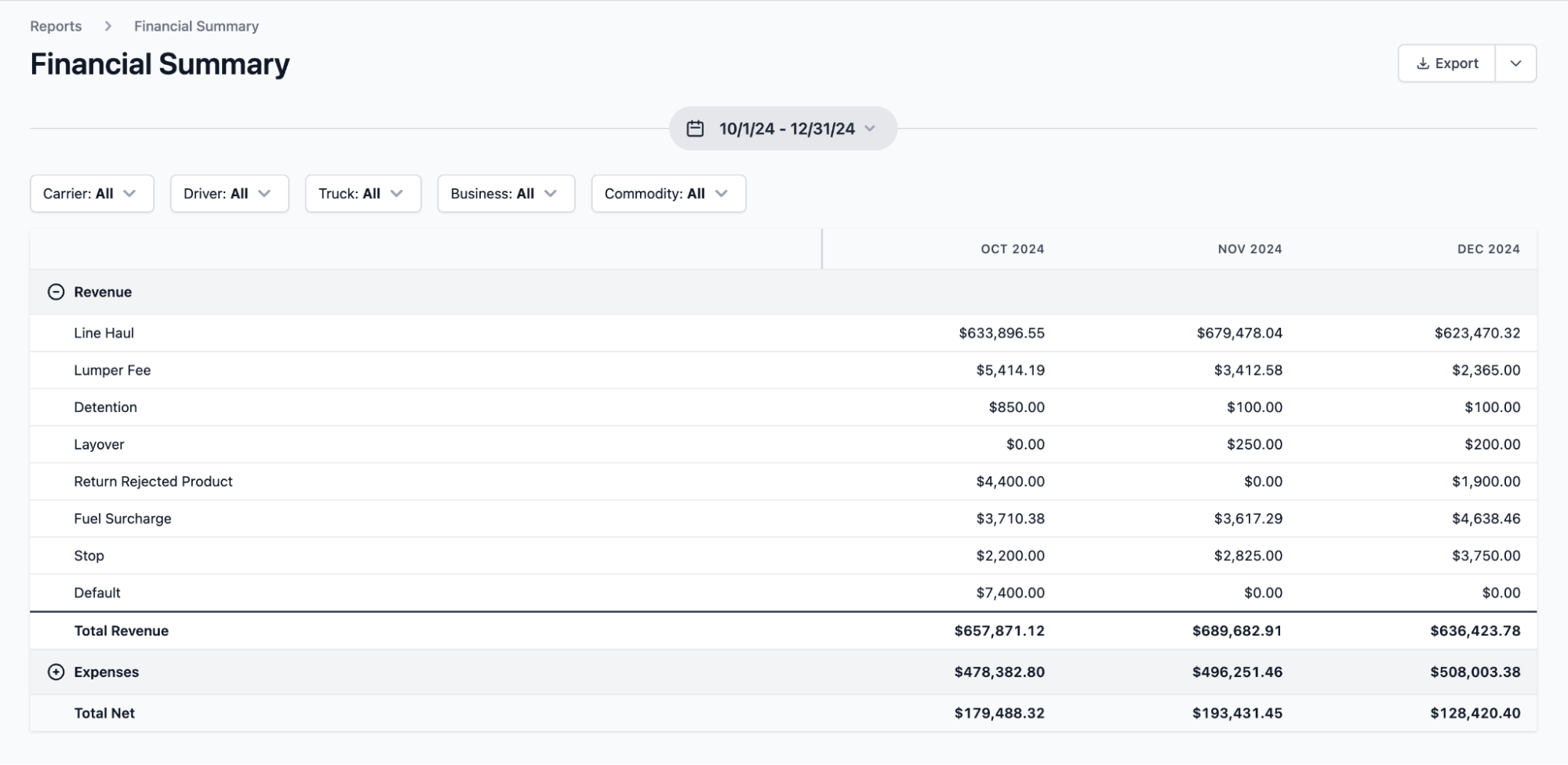
With Toro's reporting tools, you can:
- Break down profitability by load, commodity, or customer. See revenue and expenses for specific hauls (like grain runs to the elevator or fertilizer deliveries to the co-op) and identify which types of work are bringing in the most profit. For example, you might discover that your livestock hauls are more profitable per mile than your feed deliveries, even though feed volume is higher.
- Analyze driver and route performance. Track average loads per day or fuel efficiency by driver to identify your top performers. You might find that certain drivers consistently complete more grain runs during harvest because they're better at coordinating with elevator staff, which helps you optimize scheduling for peak season.
- Monitor load volume and empty miles across your fleet. Review total hauls by commodity and identify backhaul opportunities to reduce wasted miles. For instance, if you're delivering feed to a feedlot in the morning, you might identify a return grain haul from a nearby farm instead of running empty.
- Compare different pay structures. Evaluate whether per-ton rates for grain or per-head rates for livestock are keeping your drivers motivated and fairly compensated. If driver turnover is high on certain routes, the data might reveal that flat-rate pay isn't competitive compared to mileage-based compensation.
- Track customer trends and seasonal patterns. Identify which customers generate the most revenue or which months drive the highest load counts. For example, if you notice that one elevator accounts for 40% of your grain volume during harvest, you could better allocate equipment and plan for seasonal staffing needs.
Read more: Profit & loss statement for a trucking company: Free template (+ an alternative)
Ensure your team adopts the platform with in-person onboarding and dedicated support
One of the biggest reasons fleet and dispatch software fails is poor adoption among internal teams. The standard approach is to provide login credentials or some training videos and expect your team to figure it out from there. But this typically doesn't work because most platforms are too complicated or difficult to use.
At Toro, we know that agricultural bulk haulers need hands-on, practical guidance to get value from the platform right away. That's why we offer in-person onboarding for every customer.
Our trainers come to your office and work directly with your team, walking through real scenarios like building load templates for grain runs, assigning livestock hauls to the right equipment, uploading scale tickets from the field, and running end-of-week driver settlements.
Everyone learns how the system fits into their actual daily workflow, not some generic tutorial that doesn't match how your operation runs. And because Toro's interface is built to be intuitive and straightforward, even team members who aren't particularly tech-savvy can get up to speed quickly.
If any issues come up, Toro’s support team responds within 30 minutes during business hours (9 A.M.–9 P.M. ET).
Want to see how Toro TMS can streamline your ag hauling operation? Schedule a demo today to learn more.
5 additional agricultural fleet management software options
1. Fleetio
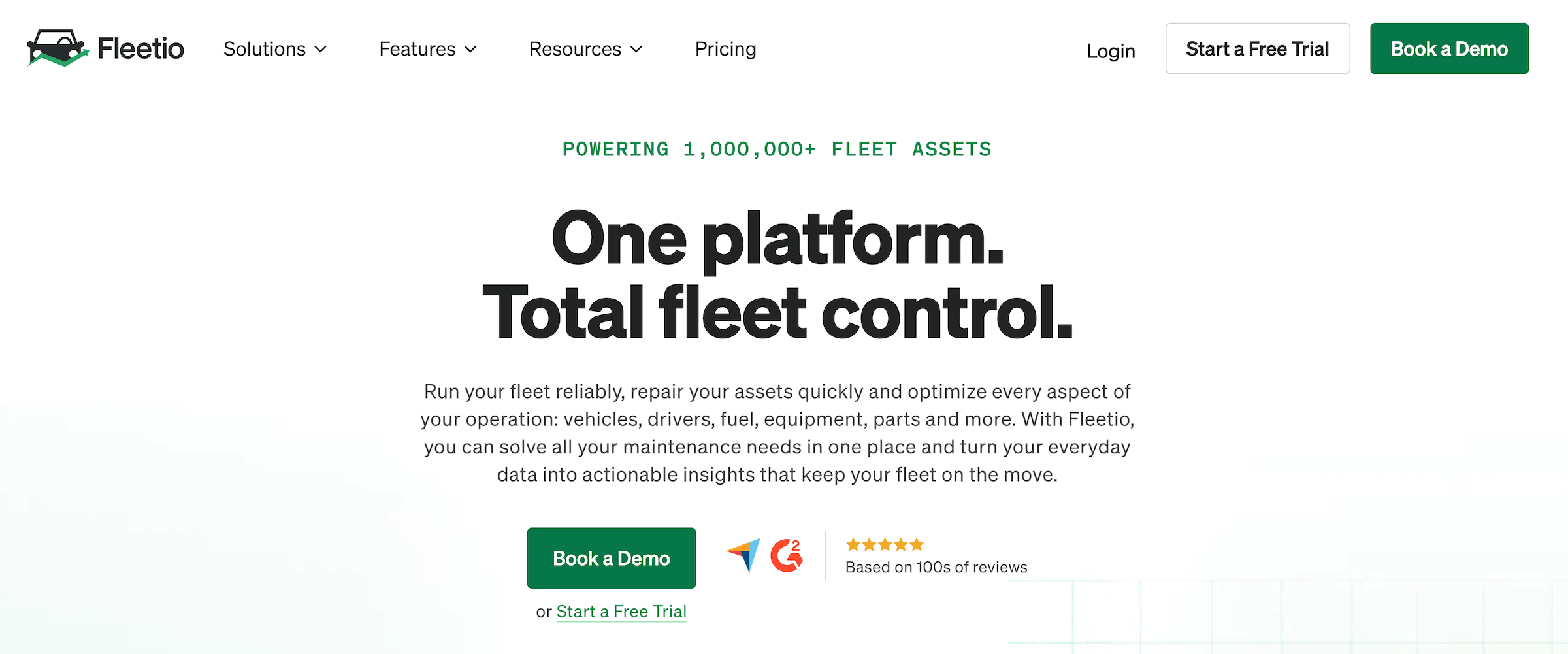
Fleetio is a maintenance-focused fleet management platform that helps operations that need detailed service tracking and asset management to control operational costs.
The software lets you schedule preventive maintenance based on engine hours or calendar intervals, which is especially useful for farm management operations running mixed agricultural equipment types. However, the tool does not offer a built-in dispatch module for route optimization or load planning.
Key features include:
- Preventive maintenance scheduling
- Digital vehicle inspection checklists with photo uploads from mobile devices
- Fuel tracking and cost analysis by vehicle or equipment type
- Work order management with parts inventory tracking
- Customizable service reminders and maintenance alerts
- Equipment tracking and complete asset management for agriculture businesses
2. Samsara
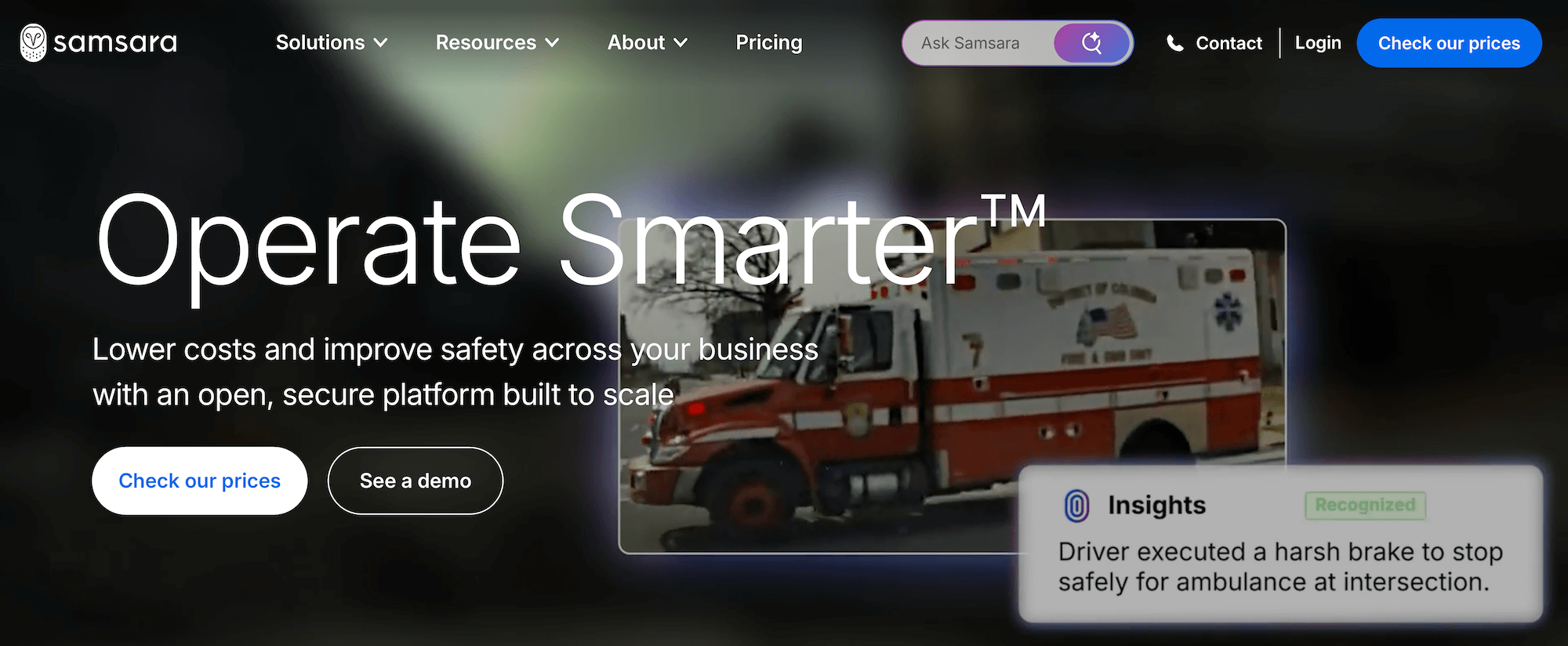
Samsara is a fleet management platform with telematics, GPS tracking, and video dashcam capabilities. It's better suited for larger fleets that need real-time visibility into vehicle locations, driver behaviors, and performance metrics to reduce downtime.
The platform does offer route tracking, fuel monitoring, compliance management, and integration with temperature sensors for refrigerated hauls. The tool's vehicle diagnostics also help operations catch potential breakdowns before they happen. But it doesn't handle dispatch or billing workflows natively—you'll still need separate tools for load management and invoicing.
Key features include:
- Real-time GPS tracking with geofencing and route replay
- AI-powered dashcams with driver safety scoring and incident detection
- ELD compliance and automated HOS tracking
- Vehicle diagnostics and fault code monitoring
- Temperature monitoring for refrigerated agricultural products
3. Motive
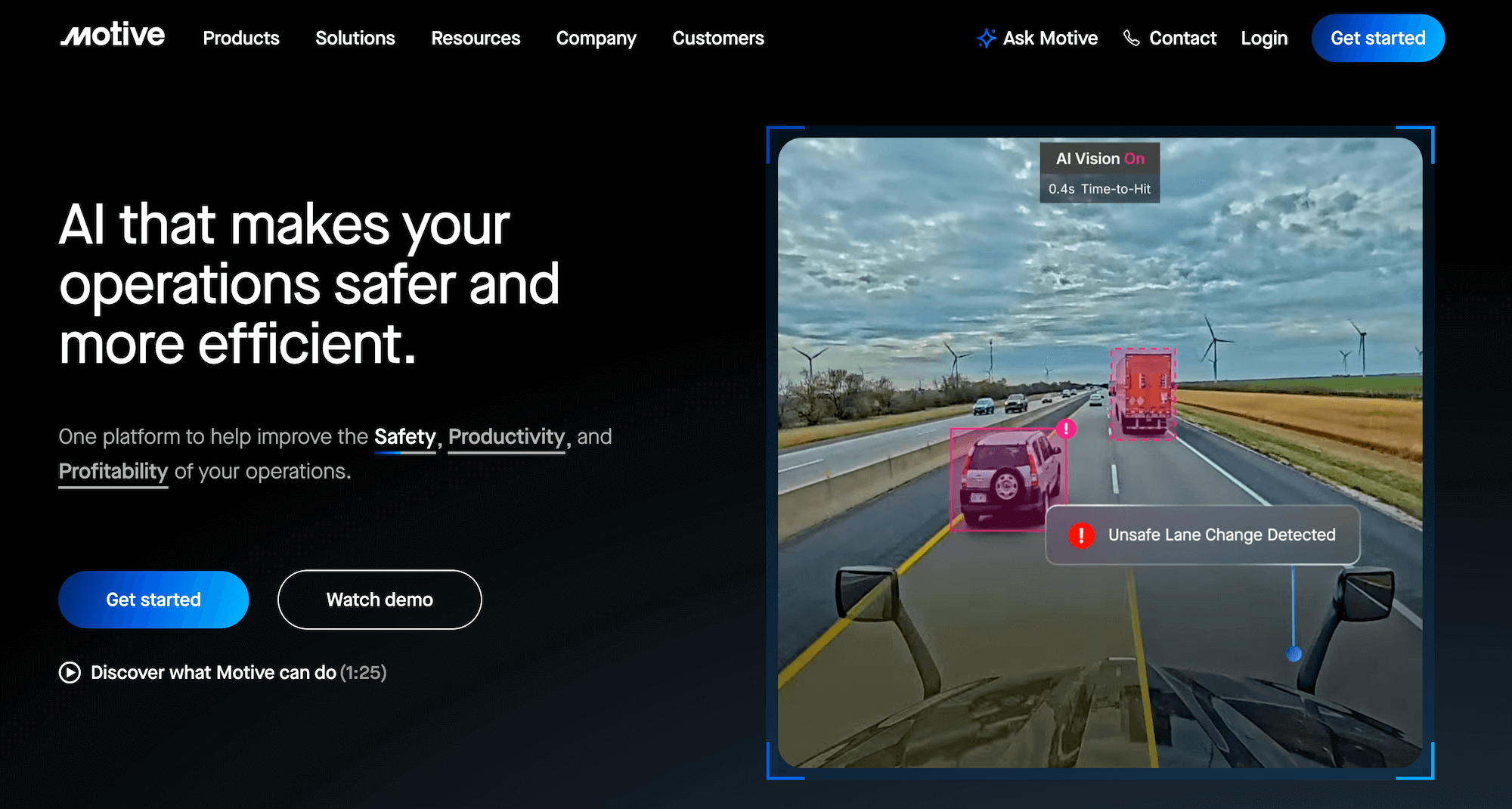
Motive is built for trucking operations that want to increase visibility into driver safety and regulatory compliance. The platform includes GPS tracking, ELD compliance, dashcams, and AI-powered fuel analytics.
Motive's AI dashcam system can detect risky driving behavior and provide real-time alerts, which can be useful for high-volume operations with multiple drivers and equipment types.
Key features include:
- AI-powered dashcams with real-time driver coaching and event detection
- Automated ELD and HOS compliance tracking
- Fuel card integration with AI-driven fuel efficiency insights
- Preventive maintenance alerts based on engine diagnostics
- IFTA reporting and mileage tracking by state
4. Geotab
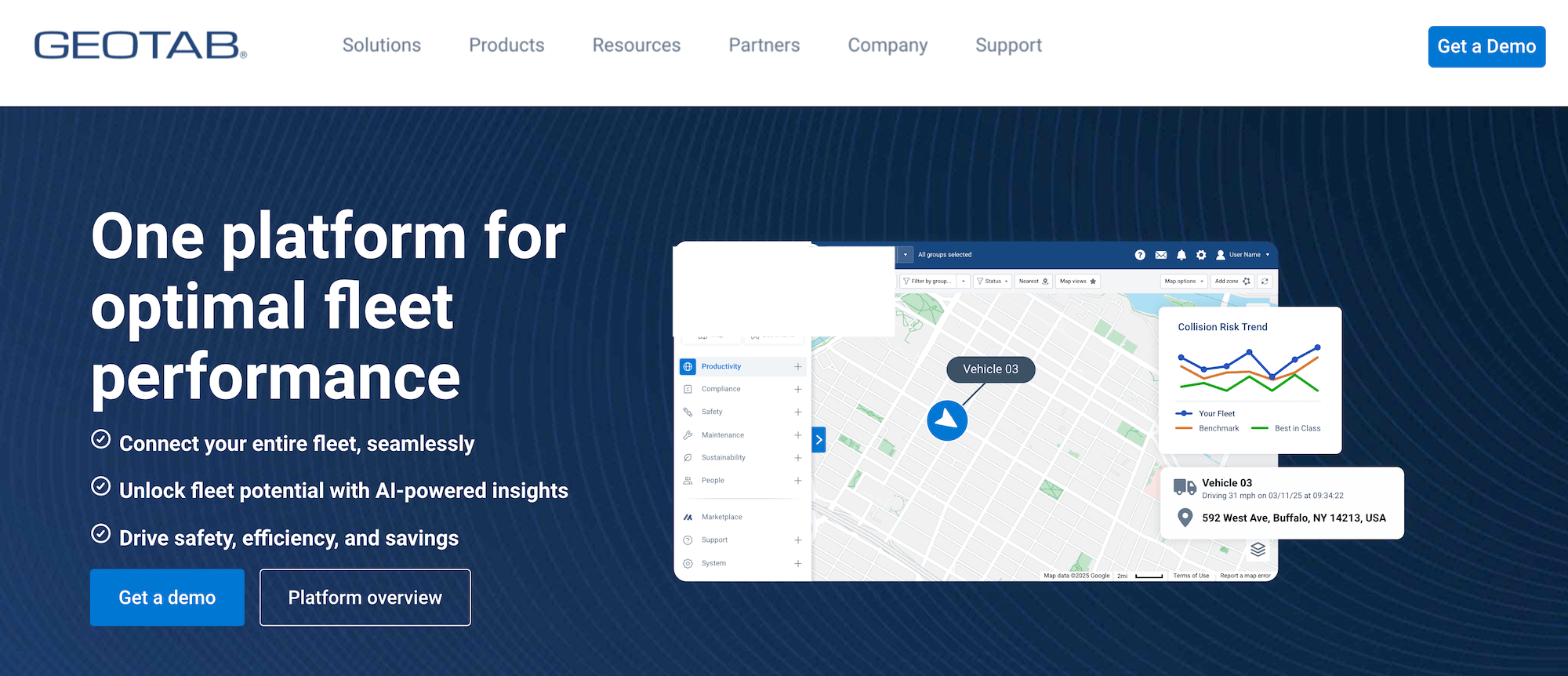
Geotab is a telematics and GPS tracking platform with extensive data collection capabilities and advanced customizable reports. It's commonly used for agricultural fleet tracking because it offers satellite connectivity options for areas with limited cellular coverage.
It can track vehicle location, engine diagnostics, fuel costs or consumption, and driver behavior, and it integrates with precision agriculture tools. But the sole focus of this tool is fleet tracking and vehicle health, not dispatching, load management, or accounting.
Key features include:
- GPS tracking with satellite connectivity and ELD integrations
- Engine diagnostics and predictive maintenance alerts
- Fuel consumption monitoring and idle time tracking
- Customizable reporting dashboards for fleet performance analysis
5. Simply Fleet
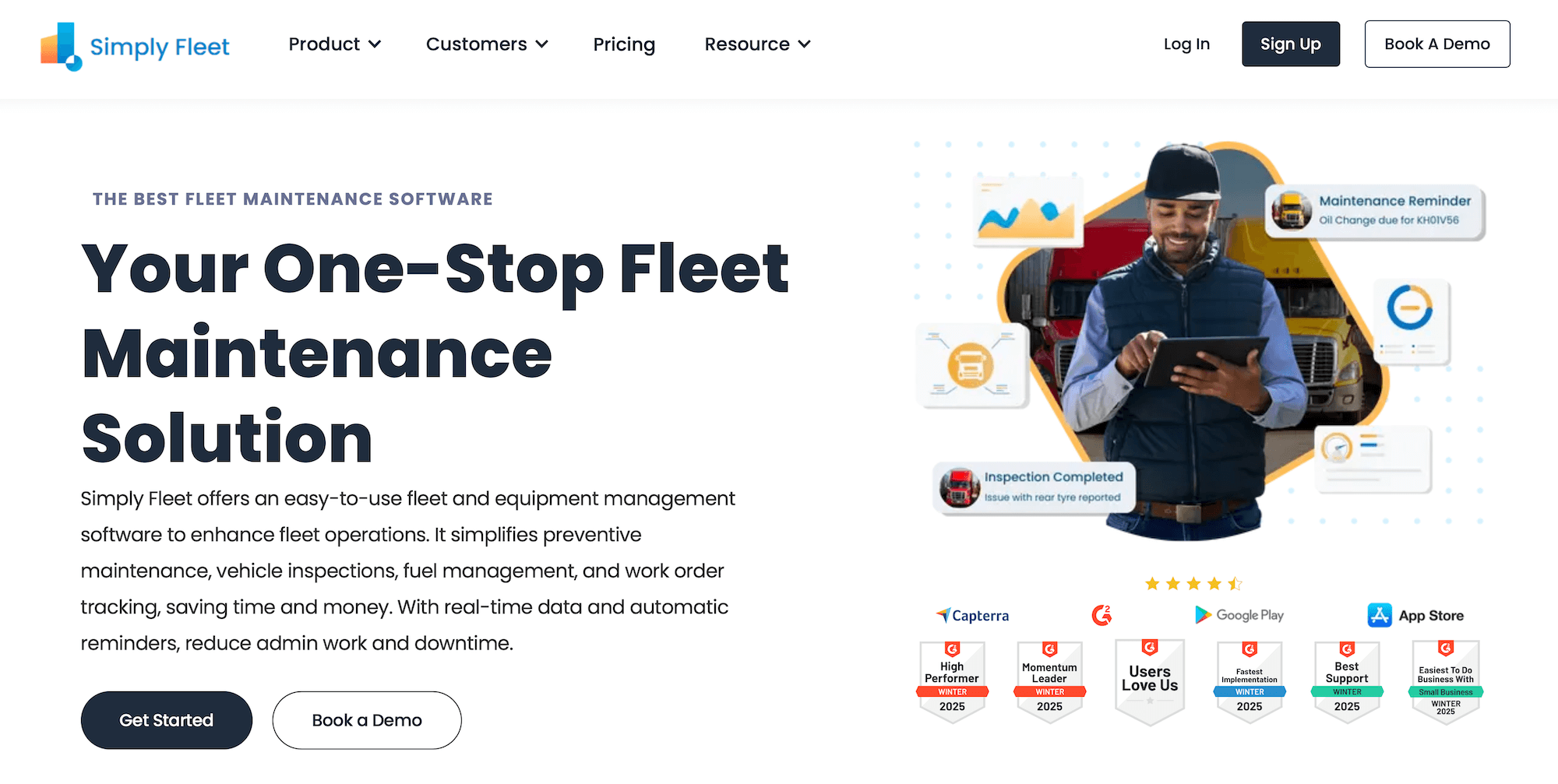
Simply Fleet is a low-cost, user-friendly fleet maintenance and management platform. It's built for small to mid-sized operations with a focus on tracking service schedules, fuel management, managing inspections, and organizing vehicle records.
It's a solid entry point for smaller agricultural hauling companies or farms managing a handful of trucks alongside tractors and equipment, looking to cut costs without investing in enterprise software. However, once your operation grows, you'll quickly notice how limited the platform can be.
Key features include:
- Service interval tracking by hours, mileage, or calendar time
- Fuel usage tracking with cost tracking per vehicle
- Digital inspection checklists for daily equipment checks
- Work order management with repair history
- Parts inventory tracking with reorder alerts
Choose the right agriculture fleet management software for your operation
The software you choose should match how you work and what you actually need to manage. If you're hauling agricultural commodities, you'll need a tool that makes it easy to coordinate loads during high-volume seasonal windows or manage paperwork for different commodity types.
Toro TMS was built to do exactly that. It connects your dispatch operations and back-office teams in a single system, helping agriculture fleets operate more efficiently.
With Toro TMS, you can:
- Build and dispatch recurring loads in seconds using pre-saved job templates.
- Manage drivers and equipment from one dashboard to keep deliveries on schedule during harvest and planting seasons.
- Get scale tickets, BOLs, compliance documents, and delivery receipts from the field to the office instantly with mobile uploads.
- Automate invoicing and driver pay based on commodity-specific rate structures.
- Gather more in-depth operational insights with real-time reporting.
Ready to see how Toro TMS works for agricultural hauling operations? Book a free demo today.